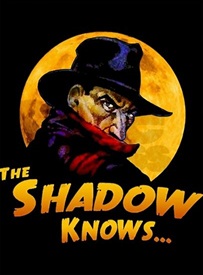
 Who knows what evil lurks in the hearts of men?
The Shadow knows!
The Shadow (1937-1954) aired “The Blind Beggar Dies” on April 17, 1938. Though only 278 episodes are known to still exist out of over 800 (depending on how one counts), the number is subject to change as new episodes are unearthed from time to time. Out of the just over three dozen episodes of The Shadow we’ve run since 2009, this is only the third since April of 2023, three years ago, so I felt it was time for another, for The Shadow has proven quite popular with Golden Age radio fans, and especially fans of the Shadow in both radio and magazine formats.
The following is an abridged account of the character’s radio and magazine history for those coming to The Shadow for the first time. Long-time listeners may have forgotten some of the details, so if you are among them, refresh your memories or take a moment to grab your favorite beverage of choice before listening to this episode.
The history of the Shadow character is long and storied. A bare bones synopsis begins on July 3, 1930 when the narrator of magazine publisher Street & Smith’s radio version of its pulp magazine, Detective Story Magazine, was given the name of The Shadow. This mysterious voice who merely introduced and narrated the radio show, but was not a character in any of the episodes, became so popular after it was taken over by Frank Readick, Jr. and his spooky, phantom laugh that on April 1, 1931 The Shadow magazine was born. It ran for 325 issues, 282 of them written by Walter B. Gibson (1897-1985) under the house name of Maxwell Grant.
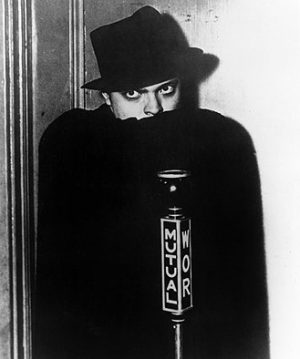
 The Shadow debuted on radio on September 26, 1937 and delighted fans for more than seventeen years, closing shop on December 26, 1954. The radio show began its long run on the Mutual Broadcasting Network on Sunday evenings and was sponsored by Blue Coal. From its inception until just past its first year (Sept., 1937-Sept., 1938) the voice of the young 22-year-old Orson Welles (1915-1985, photo top right as the Shadow) would be heard as that of the Shadow, and Agnes Moorehead (1900-1974, photo at left) would play the role of “the lovely Margot Lane,” his “faithful companion” and aide. Following Welles’s departure (“Professor X” was his final episode) Bill Johnstone (1908-1996) became the Shadow for the September 25th, 1938 episode, at the beginning of Season Two. He was then succeeded by Bret Morrison (1912-1978), who, in two stints (1943-44 & 1945-54), was radio’s the Shadow for ten of its seventeen years (though others besides these three mainstays would ascend to the role). Moorehead would also exit the show
 (in 1940) to follow Welles after he formed his Mercury Theater on the Air, as well as appear in several of the young genius’s classic films. That said, Moorehead would take a break (March to September of 1938) during the second season, at which time the more than capable Margot Stevenson (1912-2011, photo at right) would assume the role of Margot Lane.
To arrest possible confusion arising from seeming inconsistencies between the print and radio versions of The Shadow it is important to note the following differences (though there are others):
The original print version of the Shadow portrayed him without any powers at all; he was a shadowy figure of the darkness, a cunning sleuth dedicated to overthrowing evil wherever he found it. It wasn’t until the radio version came along that he was imbued “with the power to cloud men’s minds” from a secret he learned in the Orient.
In The Shadow novels, Miss Lane’s first name was spelled Margo; for radio it was Margot.
In The Shadow novels, Margo Lane was not aware of the Shadow’s secret identity; for the radio scripts she was the only one who did know his secret identity.
In the magazine, the Shadow’s primary alter-ego was (eventually) revealed as that of Kent Allard; his radio alter-ego was Lamont Cranston.
“The Blind Beggar Dies” is not one of the more sexy, high profile adventures of the Shadow, where he battles talking skulls, an island of the living dead, vampires, or secret death cults, but rather one where he battles for those who cannot fend for themselves, the common folk who are blind, lame, or otherwise eke out a bare existence on street corners; those who sell shoe laces or pencils, or sing for a few bits of coin in their outstretched tin cups like Singin’ Jim, or who sell fruit like Apple Annie. The evils of racketeering and extortion are bad enough when small shops are forced to pay weekly “protection” money to keep their livelihoods safe, but when bent nosed enforcers stoop so low as to demand protection money from those who work the street, even the Shadow eventually hears of it. Such is the case of the blind beggar Singin’ Jim who could not afford the dollar a week he was forced to pay a couple of racketeers who dragged him into an alley and beat him to death. Word spread quickly on the street among Jim’s fellow beggars, and led by Apple Annie the Shadow gathered this rag tag street community and devised a well thought out scheme to end the scourge on their poor but tight-knit family, that began when it was noticed by some but quickly forgotten by most that because he could not pay “The Blind Beggar Dies.”
The weed of crime bears bitter fruit. Crime does not pay. –The Shadow
Play Time: 28:49
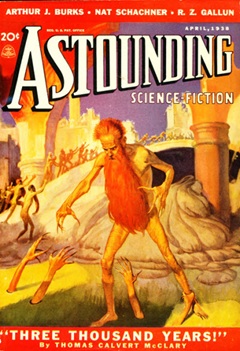
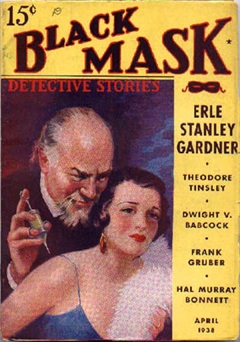
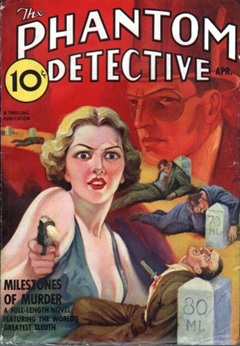
{This episode of The Shadow aired at 5:30 PM on an early Sunday evening in the middle of April 1938. Though a disheartening episode, the neighborhood gang knew they could have their spirits lifted with a visit to the corner newsstand the next day after school, when they could pick stories of adventure or danger from some of their favorite pulps. Astounding SF (1930-present, now Analog) was quickly becoming one of their go-to SF magazines and was a never-miss-an-issue favorite. It was a monthly in 1938. Black Mask (1920-1951) would garner the reputation as the best detective pulp of all time in years to come, over time publishing some of the greatest detective authors and stories the genre had ever seen, including Dashiell Hammett’s classic The Maltese Falcon as a serial begun in the September 1929 issue and concluding with the January 1930 issue. Black Mask was a monthly in 1938. The Phantom Detective (1933-1953) was published as a rival to Street & Smith’s highly popular The Shadow magazine. Never quite hitting the heights of The Shadow, The Phantom Detective was nevertheless a worthy competitor, with its lengthy 20+ year run making it the longest-running single character pulp of all time. It too was a monthly in 1938.}
[Left: Astounding SF, 4/38 – Center: Black Mask, 4/38 – Right: The Phantom Detective, 4/38]
To view the entire list of weekly Old Time Radio episodes at Tangent Online, click here.