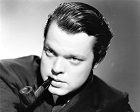
 Campbell Playhouse (1938-40) aired “Lost Horizon” on December 3, 1939 as the 39th of its 56 episodes. This is only the second episode of this program we have run since the first in 2009, so a bit of background is in order. Campbell Playhouse is a direct continuation of Orson Welles’ renowned Mercury Theatre on the Air which ran on CBS from July 11, 1938 to December 4th, 1938. Following Welles’ famous Halloween adaptation of H. G. Wells’s War of the Worlds on October 30, 1938, he was approached by representatives of Campbell Soup who were looking to sponsor a show, and a young Welles agreed to move his repertory company to a new date and time under the famous soup company’s banner. Mercury Theatre on the Air’s final broadcast came on December 4, 1938 a mere five weeks following the Halloween broadcast, and five days later the first show with Campbell Soup as the sponsor aired on December 9, 1938. The program ran for 56 weeks with Welles at the helm as script writer and editor, with noted screen actor John Houseman also as both script writer and editor. Following creative differences with the sponsor, Welles and Houseman left the show in March of 1940, though the sponsor continued it with a new crew, altering the format from one hour to thirty minutes with a difference in the material they chose to adapt, moving away from the classics Welles preferred to more accessible, popular fare fitting the new half-hour format.
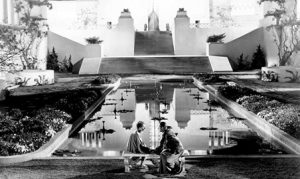
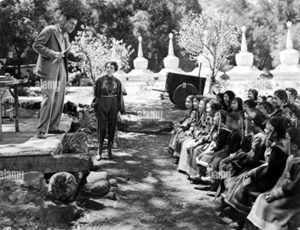
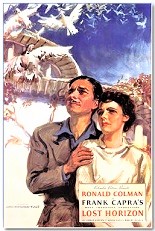
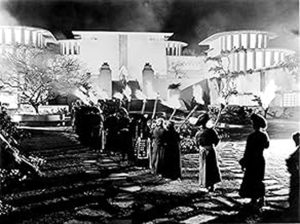
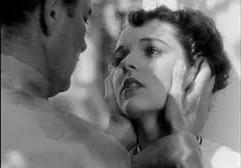
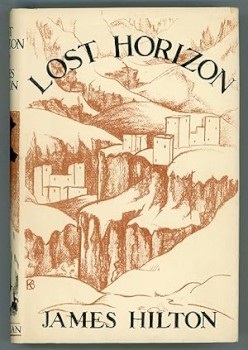
Lost Horizon traces back to 1933 and James Hilton’s famous novel. It has been adapted for radio at least 5 times, one of which we ran as an episode of Favorite Story back in December of 2011 in a half-hour version, starring Ronald Colman (who also starred in the 1937 Frank Capra produced film along with Jane Wyatt who would become Margaret Anderson in TV’s Father Knows Best in the 1950s). Several restorations of the original film have been made over the years, and a 92-minute TV version was made in 1952. The original film was honored with two Academy Awards, one for Best Art Direction and one for Best Film Editing.
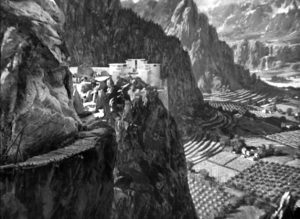
The story itself is quite memorable. A synopsis barely covers the metaphysical and philosophical issues raised in the story, which makes the novel, the film, and this hour long adaptation so thought-provoking and worthy of your time. The story begins during the British Raj–the British colonial period during the occupation of India (1858-1947). In 1931 there is a revolt and a handful of westerners are being evacuated in the maharajah’s plane to Peshawar. It is highjacked and heads for Tibet where it crashes in the snow-covered mountains. Before the pilot dies he tells the westerners to find the Tibetan lamasary known as Shangri-la, which lies atop a remote peak called Karakal, high in the Kunlun mountains. Karakal’s name translates to the “Blue Moon.” Survivors of the crash are soon rescued by postulants of Shangri-la where they are introduced to its inhabitants, including a beautiful young woman who speaks no English, and the High Lama. The westerners react differently toward their new surroundings, some with doubt or puzzlement, some with awe, and some as if nothing is unusual at all. In due time they discover the many wonders of Shangri-la, including a few modern conveniences like central heating and bathtubs from America, a contemporary library, and other objects from seemingly different historical eras, the lamasary being built in the early 18th century. With many questions on the minds of several of the newcomers, they soon learn of a terrible secret passed on to them by the now dying High Lama, forcing them to make a choice some of them are not willing or prepared to make. To experience the wonders, and life-altering secret of the lamasary of Shangri-la, lost and frozen in time high in the mountains of Tibet, be glad you can learn of its existence through this excellent audio adaptation and do not have to have personally visited this impossibly “Lost Horizon.”
As you might suspect, Orson Welles plays the High Lama Perrault. In the 1937 film it is well known actor Sam Jaffe (1891-1984) who portrays the High Lama. Those of a certain age will remember Jaffe as Dr. Zorba, the elder doctor who was mentor to Ben Casey, played by Vince Edwards in the title role of TV’s medical drama Ben Casey (1961-65). And science fiction fans will remember Jaffe fondly as Professor Jacob Barnhardt in the classic 1951 SF film The Day the Earth Stood Still.
Play Time: 53:45