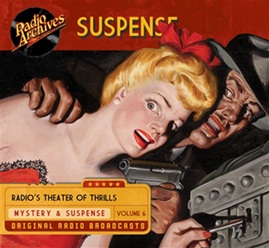
 Suspense is compounded of mystery and suspicion and dangerous adventure. In this series are tales calculated to intrigue you, to stir your nerves, to offer you a precarious situation and then withhold the solution… until the last possible moment when we again hope to keep you in…Suspense!
Suspense (1942-1962) aired “The Black Curtain” on December 2, 1943 as the 68th of its 945 episodes.
As recounted in the introduction to the approximately 60 episodes of Suspense we’ve shared over the past seventeen years, it was such a rich goldmine of superior stories that we found each one has had something unique to offer. Suspense was one of the most well produced, written, acted, and critically acclaimed of all radio shows during the Golden Age of Radio, many a film star jumping at the chance to perform in an episode, among them Cary Grant, Orson Welles, Jimmy Stewart, Susan Hayward, Vincent Price, Charles Laughton, Loretta Young, Peter Lorre, and Rita Hayworth. After many another radio show had gasped its last breath during the 1950s, Suspense (along with Yours Truly, Johnny Dollar) finally closed shop in September of 1962 whereupon radio historians proclaimed the Golden Age of Radio dead, television having become the medium of choice in America.

(With this episode of Suspense, the program moves from Wednesday to Thursday nights at 8 PM, and Roma wines becomes the new sponsor for the next four years.)
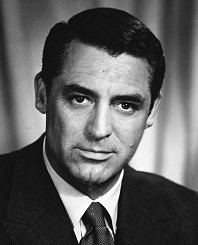
The Black Curtain was written by noted crime novelist and short story writer Cornell Woolrich (1903-1968) and was published in 1941 by Simon and Schuster. This 1943 radio adaptation of the novel stars silver screen legend Cary Grant (1904-1986, photo at top). Grant plays the lead character, Frank Townsend, who is missing the last three years of his life. The last thing he remembers after awakening in the street with a bump on his head is July of 1940, when in fact he now finds himself in the dead of winter in December of 1943. He soon discovers he may be wanted for murder, so to find out the truth and hopefully exonerate himself, he ends up on a crazy quest to piece together the pieces of his life and in the process find who may be the actual murderer. Grant turns in a riveting performance as his growing desperation to find the truth of who he is and what he may have done has listeners squirming in their seats. Listen now as Cary Grant tries to lift “The Black Curtain” of amnesia from his tortured mind as he fights to dispel the overwhelming panic that grips him, reminding him at every moment that he may have committed murder.
(The linked CD at top includes this episode and 11 others, all digitally remastered and restored.)
Play Time: 29:37
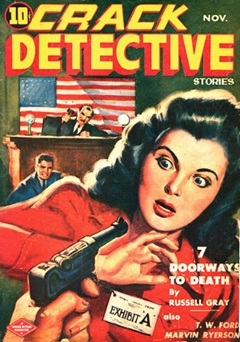
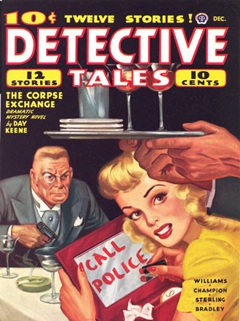
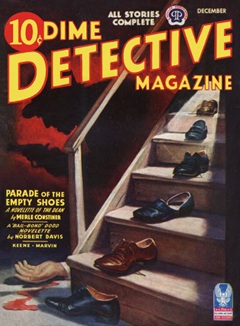
{Airing on a Thursday evening in early December of 1943, the neighborhood gang was so energized after listening to this episode of Suspense that they could hardly wait for school to let out the next day. Being a Friday, the gang met at the nearby newsstand/bookstore to choose their weekend reading. Crack Detective (1938-57) wasn’t considered one of the top tier detective magazines, but must have been doing something right to keep its audience coming back for more over its 20 year and almost 100 issue lifespan. It was a bi-monthly in 1943. Detective Tales (1935-53) was (according to a source I use frequently) the second most popular of Popular Publications detective magazines, providing quality detective fare for almost 20 years and just over 200 issues. It was a monthly in 1943. Dime Detective (1931-53) was the most popular of Popular Publications detective magazines (outselling its sister magazine Detective Tales, noted above). It was one of the publisher’s longest running titles, managing its hefty schedule (bi-weekly from 1933-35, otherwise monthly until its last 3 years) for 23 years and 274 issues. It too was a monthly in 1943.}
[Left: Crack Detective, 11/43 – Center: Detective Tales, 12/43 – Right: Dime Detective, 12/43]
To view the entire list of weekly Old Time Radio episodes at Tangent Online, click here.