 Favorite Story (1946-49) aired “The Lady of the Lamp” on Saturday, July 31, 1948 (though dates vary as the show was broadcast on different days and time slots due to its being syndicated and thus aired at the discretion of individual radio stations across the country). The idea behind this popular show was to invite personalities of the time—authors, musicians, movie stars, sports celebrities, and others with a high profile–-to offer their favorite stories to be dramatized on radio. We’ve run 14 since the first back in 2010, this current episode being only the 3rd since January of 2022, over four years ago, with the most recent showcased in August of last year. For newcomers to the program or to refresh the memories of those familiar with the show, a few background notes are in order.
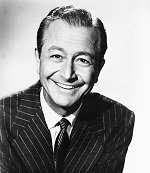
Before we begin the background notes, “The Lady of the Lamp” was the Favorite Story choice of none other than Robert Young (1907-1998, photo top right).
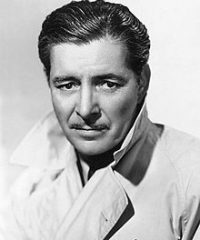
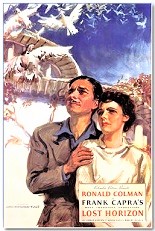 Favorite Story was hosted by the suave, debonair, early film star Ronald Colman (1891-1958), who on occasion would star in these well-produced adaptations of classic stories. Of interest to SF genre fans is Colman’s starring role in the 1937 film adaptation of James Hilton’s 1933 novel Lost Horizon. He was signed to play the lead in MGM’s forthcoming SF film Village of the Damned (1960), but died before production began. The film was picked up by a British company and starred George Sanders in the lead role. (Coincidentally, Sanders would marry Colman’s widow, Benita Hume.) Colman was nominated for three Best Actor Oscars and would win the Oscar for 1947’s A Double Life. He was honored with not one, but two stars on the Hollywood Walk of Fame, one for motion pictures and one for television. Directed by beloved film director Frank Capra, Lost Horizon co-starred a young Jane Wyatt (1910-2006) who would later be fondly remembered as Margaret Anderson as the wife of insurance salesman Jim Anderson (portrayed by Robert Young) in TV’s favorite family sitcom Father Knows Best (1954-1960). For her role as America’s favorite mother she would win consecutive Emmy Awards for Best Actress in a Comedy Series in 1958, 1959, and 1960. Wyatt would also have roles in a few dozen films over her career, probably the most notable being 1947’s Gentleman’s Agreement starring Gregory Peck, Dorothy McGuire, John Garfield, Celeste Holm, and Dean Stockwell. Appearing in numerous television shows from the 1950s to the 1980s, she is perhaps best remembered by science fiction fans as Spock’s mother in the original Star Trek TV series episode “Journey to Babel.”
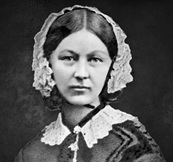 As for “The Lady of the Lamp,” it reveals the stalwart determination of none other than Florence Nightingale (1820-1910) who overcame personal, familial, and all manner of other prejudicial obstacles against women in her campaign to bring nursing care not only to those wounded at the battle of Balaclava (October 25, 1854) in the Crimean War (1853-56) and who were transported many miles away to the Scutari hospital in Constantinople, but eventually human beings anywhere regardless of their station or need.
It was the aforementioned battle of Balaclava during the Crimean War that brought Florence Nightingale to prominence and cemented her deeds into the historical record forever. After being thwarted at every turn to convince officials of the importance of female nursing, it was the British Secretary of War, Sidney Herbert, who gave Nightingale permission to bring 38 nurses to the military hospital at Scutari (a first) to attend to the wounded who had been transported from the battle of Balaclava on October 25th. Nightingale and her nurses arrived on November 4th, just in time to receive many of the wounded, which totaled over 150. The cause of the large number of wounded at Balaclava was due either to poorly written or misunderstood orders passed on to British military officers on scene, who interpreted the orders to commence an attack using the Light Brigade, soldiers mounted on horseback armed with only sabers and lances, against a fortified Russian artillery battery. Following an initial, brief success due mainly to surprise, the Light Brigade was forced to retreat, but only after 110 were killed and 160 wounded (with 375-500 horses lost) out of the original manned force of 670. It was one of the most disastrous defeats the British military had ever suffered. Ten short days following the defeat, Britain’s Poet Laureate, Alfred, Lord Tennyson, would pen his now famous narrative poem “The Charge of the Light Brigade,” emphasizing and romanticizing the heroic efforts of the brave soldiers in the face of certain death. But it was Florence Nightingale’s efforts to introduce proper care of the wounded that set the tone for the future, with her emphasis on hygiene (clean bandages, the washing of hands and other sanitary measures) to counteract infection, proper storage of food, and the correct use of medicines, that would in times to come reduce the death toll of the wounded from 42% to 2%. It was this confluence of events: a military disaster, a famous poem, and the arrival of a woman devoted to saving lives from that military disaster, that has since been handed down to us through many generations as the story of the struggles and success of Florence Nightingale, who has come to be known simply as “The Lady of the Lamp.”
Play Time: 26:52
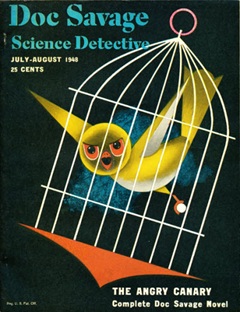
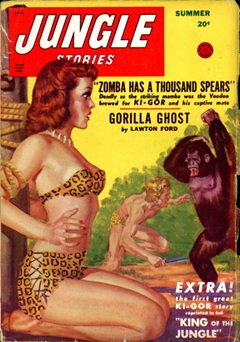
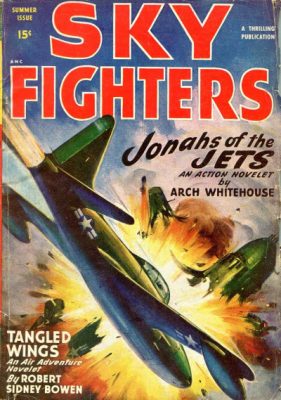
{“The Lady of the Lamp” aired on the last day of July in 1948, a Saturday. Parents wouldn’t let any of the neighborhood gang skip church the next morning, so after the service they headed home, changed out of their Sunday best, and headed for the nearby newsstand to add new material to their every-growing pulp collections. It was a varied bag of choices this time, as they chose fast paced detective adventure, jungle adventure, and war adventure to help them pass a few more days of their summer vacation. Doc Savage (1933-49) was always a treat with Doc and his companions chasing down all manner of evil, from local bad guys to those wishing to rule the Earth. From 1933 to 1946 it was a monthly. In 1948 it was a quarterly. Jungle Stories (1938-54) aimed to capitalize on the popularity of Tarzan in magazine (1912), book (1914), and then radio (1932) formats, followed by Jungle Jim on radio in 1935. There was still enough juice left in the concept of a jungle hero fighting evil for Jungle Stories to make a decent go of it, especially with the added inducements of a pretty jungle (presumably) maid on each cover and a new tale by this jungle’s lord, Ki-Gor. It was a quarterly in 1948. Sky Fighters (1932-50) still had enough young readers in thrall after WW II to keep to their quarterly schedule, for the fast-paced aerial adventures of America’s fighter pilots taking out the bad guys never seemed to grow old, especially with the advent of jet planes beginning to inject a captivating dynamic into some of the stories. It went from a bimonthly to a quarterly in mid-1944 and stayed on that schedule until its final lone issue in 1950. 1948 was its final year as a full 4-issue quarterly. }
[Left: Doc Savage, 7-8/48 – Center: Jungle Stories, Summer/48 – Right: Sky Fighters, Summer/48]
To view the entire list of weekly Old Time Radio episodes at Tangent Online, click here.